


“We overcomplicate economics enormously, we can in fact look at it much simpler. We can improve the gross margin per unit, increase the number of units in the business, or we can reduce overheads. Those are the only three things you can do to improve profit.” Stan Parsons said it forty some years ago, and we still teach it today. I appreciate how simple the 3 Secrets are.
- Reduce overheads: keep your general business costs in check
- Increase gross margin per unit: find the enterprise(s) that does financially well
- Increase turnover: do more of the enterprise(s) that are doing well
Every business, regardless of industry, can organize their incomes and expenses into categories of enterprises and overheads. Each enterprise should have a significant contribution to pay the overheads. Overheads are the costs that are just always there with the business (i.e. rent, payroll, utilities, insurance, etc), regardless of units produced. Having your numbers presented in a format like this, compared to an alphabetical list of tax deductions, will greatly improve your ability to spot profit drivers and deadwood in the business finances. That is good news because then you can tackle it head on, and fix it for next year. Here is a sample ranch example of enterprises and overheads:
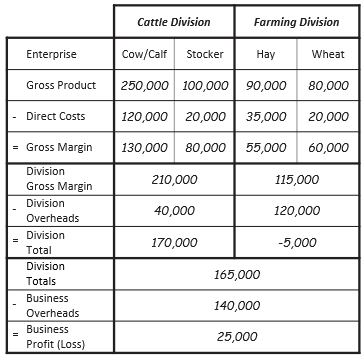
In the example above, the farming division is showing a problem because it is losing $5,000. We can then analyze each number above it, to diagnose the problem. The example Stan uses in his video is a ranch with an overhead problem but they are focusing on bull selection. Bull selection is going to factor into the gross margin per unit secret, which was not a problem in the first place. So focusing on improving bull selection would be a waste of time and energy for that ranch.
Another important factor that Stan mentions is that you can’t starve a profit into a business. Reducing overheads does not mean firing your employees or shorting your landlords. Each business has a certain amount of cost involved just to open the doors and keep the lights on. Then it is up to us to produce value in excess of those costs. We define value produced as Gross Product, and in ranching we can tie that to the physical production records such as conception rates and weight gain.
The last thing I want to point out is how Stan tied the numbers to production and then back to ecology. With his bull selection example, maybe conception rates were the problem. We identified a poor cow-calf gross margin. This leads us to focus on two areas: gross product and direct costs. If the direct costs were acceptable, then the problem lies in gross product. Gross product will be low if conception rates are unacceptably poor, because the cowherd won’t wean enough calves. So improving bull power might help, but perhaps your grass quality and/or quantity isn’t giving the cow enough nutrition to breed in the first place. Remember the symptom we noticed to our business issue was no cash in the bank. The cause of the symptom, i.e. the real problem, started in grass management, resulting in sub-par nutrition, resulting in open cows, resulting in fewer weaned calves, resulting in smaller paychecks on sale day.
Your goal as an operator should be to balance your ranch system: land, money, production, and people. Now take the time to watch or rewatch Stan’s The Only 3 Ways to Increase Profit video with this thought: how can I apply the 3 Secrets to my own business. Feel free to share your thoughts or findings in the comments below.